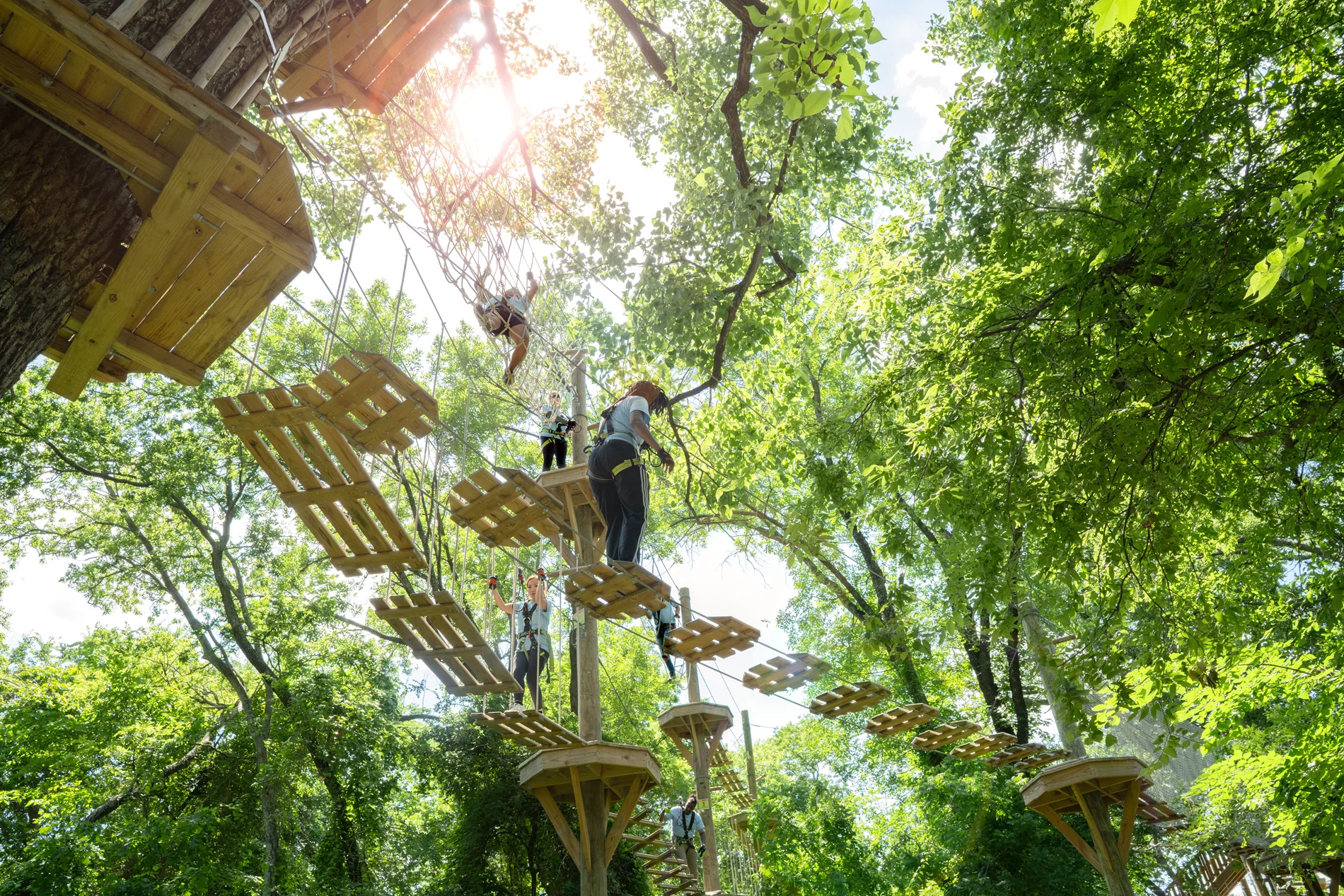
April is Earth Month. Let’s celebrate it the best way we know how: outside. Celebrate Earth Day (April 22) and Arbor Day (April 24, 2026) in the trees.
Earth Day and Arbor Day are reminders of why forests matter, how we enjoy them, and what it takes to keep them healthy for generations to come.
If you’re searching for Earth Day activities outdoors that feel meaningful (but still fun), you’re in the right place. At Go Ape, adventure and stewardship go hand in hand. Our treetop adventures are designed to immerse you in nature, support the parks we call home, and inspire simple, real ways to give back.
Why Earth Day and Arbor Day Both Matter
- Earth Day (April 22) celebrates our shared responsibility to protect the planet.
- Arbor Day (April 24, 2026) shines a spotlight on trees – the backbone of healthy forests and resilient ecosystems.
Together, they invite us to participate in our shared ecosystem by recreating responsibly, supporting conservation, and helping land managers, like the US Forest Service, protect forests where we play.
Forest Stewardship at Go Ape: Built with Nature in Mind
At Go Ape, forest stewardship is foundational to how our aerial adventure parks are designed and operated.
- Low-Impact by Design: Go Ape zipline courses use passive, low‑impact installation techniques that minimize disturbance to trees and forest floors. Platforms and cables are thoughtfully placed and use a barrier called tree protection, maintain canopy health, and preserve natural growth patterns. This approach allows adventure to exist within the forest—not at its expense.
- Partnerships that Protect Parks: Every Go Ape location operates through partnerships with public parks and nature preserves. Through a revenue‑sharing model, a portion of ticket sales goes directly back to our park partners to support:
- Trail maintenance
- Habitat restoration
- Visitor education
- Long‑term conservation planning and park support
When you visit Go Ape, you’re having fun and helping parks thrive. Learn more about our commitments in being Rooted in Nature and About Our Mission.
Earth Day Activities Outdoors That Go Beyond “Leave No Trace”
Sustainable recreation doesn’t mean doing less. It means doing things thoughtfully.
Here are a few Arbor Day and Earth Day ideas that balance adventure and impact:
- Visit a zipline park or treetop adventure that supports conservation (like Go Ape!)
- Join a park volunteer day (trail work, cleanups, invasive pulls)
- Learn how forests are monitored and how you can help forests on your outdoor adventures with Citizen Science.
According to theU.S. Forest Service, citizen science is when everyday people voluntarily help collect, observe, or analyze data that scientists and land managers use to make informed decisions about natural resources. Where there are millions of acres of forest to monitor, the outdoor community is critical to keeping them thriving.
In plain terms: You help forests stay healthy by noticing what’s happening outside. If you hike, explore, or spend time in nature, you already have what it takes.
One powerful way to get involved is through Adventure Scientists, a conservation non-profit that partners with agencies – like the US Forest Service – to collect hard-to-gather field data to advance conservation solutions.
Go Ape is proud to support Adventure Scientists and our shared mission of conservation. This includes projects that connect outdoor enthusiasts with critical research needs in forests across the U.S.
Why Forest Resilience Matters
Forests today face increasing stress from changing weather and environmental conditions, pests and disease. Healthy trees are becoming rarer, and data is essential to protecting them.
Through citizen science projects, volunteers help collect data that land managers can’t gather alone. Examples include:
- American beech health monitoring, tracking disease and regeneration patterns
- Butternut tree restoration efforts, supporting a species threatened by fungal disease
Outdoor volunteers follow clear protocols, contribute real data and help scale science across landscapes, often while doing activities they already love, like hiking, birdwatching, trail running, and exploring.
Learn more or find a project at the Adventure Scientists Forest Resilience Hub.
🌿 More Ways to Help
Here are additional citizen science projects and conservation ideas you can start today:
- iNaturalist: Log photos of plants and wildlife to help scientists track species distributions.
- eBird: Submit bird sightings that support global bird conservation and migration research.
- Nature’s Notebook: Track seasonal changes like leaf‑out and flowering – key indicators of climate trends.
- Local Park Volunteer Days: Many parks host Arbor Day tree plantings and stewardship events. Check out our locations’ parks to see how you can combine your Go Ape adventure with a stewardship event.
- Invasive Species Reporting: Many states offer apps or extension programs for spotting invasive plants and insects.
These conservation activities near me often start with a few minutes and add up to meaningful impact.
Celebrate Earth Month with Purpose
Ready to turn outdoor fun into real impact? Climb, zipline, and explore knowing your adventure supports parks through revenue sharing; join a citizen science project and help protect forests nationwide; and try iNaturalist, eBird, or a local park project!
How Does Go Ape Support Parks?
Go Ape partners with parks and nature preserves, sharing a portion of ticket revenue and participating in hands‑on stewardship activities.
What’s the difference between Earth Day and Arbor Day?
Earth Day focuses on environmental protection broadly, while Arbor Day (April 24, 2026) specifically celebrates trees and forest health.
Are these recommended activities good for families?
Yes! Go Ape activities are all family friendly and accommodating of varying skill levels and abilities. Many citizen science projects and opportunities are great for families and instill in every age how conservation can be part of our lives.
What is citizen science?
Citizen science involves volunteers helping collect or observe data that scientists and land managers use to protect and preserve natural resources and inform policy changes.