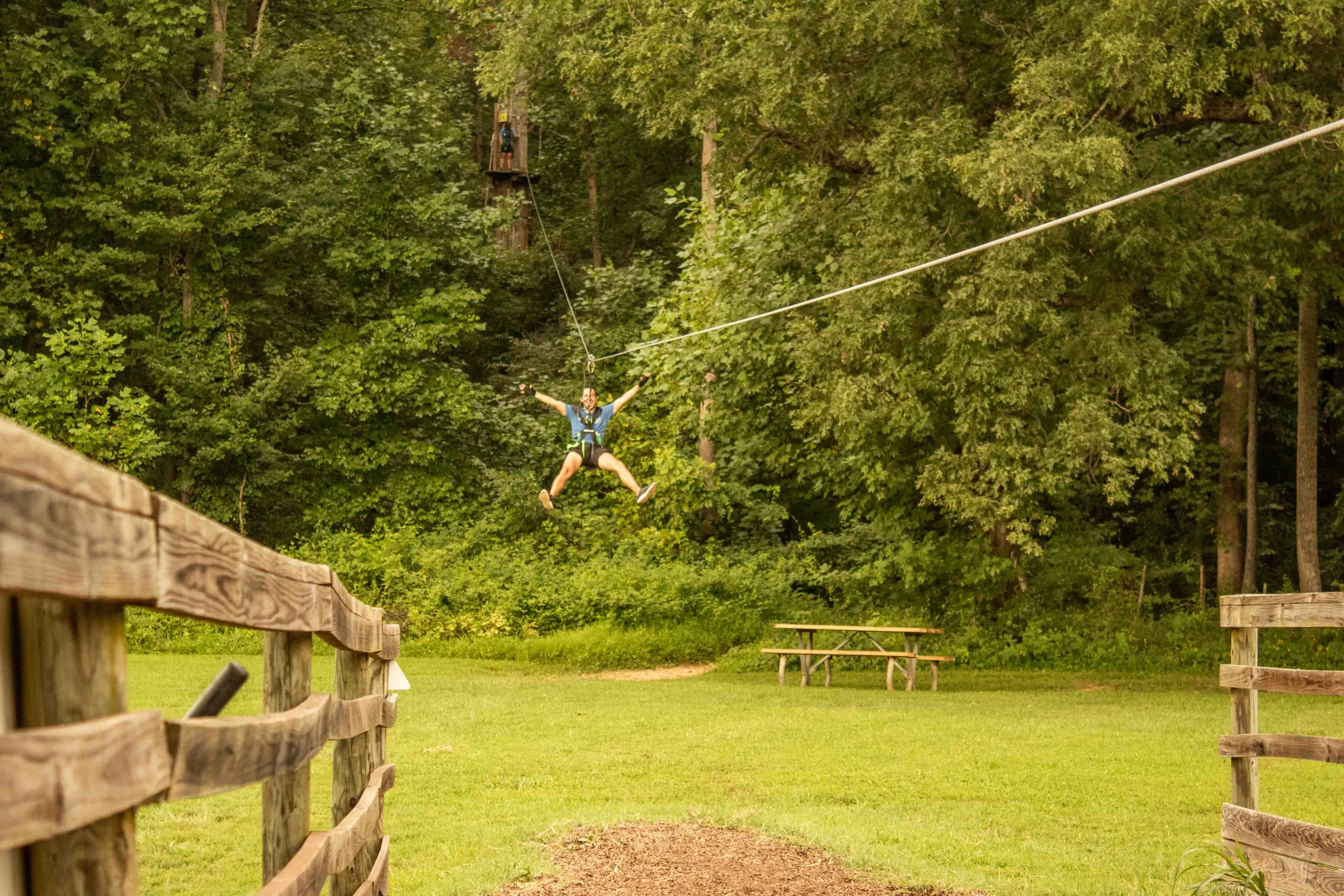
So you’re thinking about ziplining, but there’s that little voice in the back of your head asking, “Is this actually safe?” It’s a totally reasonable question – you’re flying through the air attached to a cable! But here’s the thing: when done professionally (and that’s a key word we’ll come back to), ziplining is way safer than you might think. The statistics might surprise you.
Let’s Talk Numbers (They’re Better Than You Think)
According to a study published in the American Journal of Emergency Medicine, the injury rate for ziplining is about 11.64 per 1 million people – that’s 0.00001%.1 Between 1997 and 2012, there were roughly 16,850 non-fatal injuries treated in US emergency departments. And importantly – only about 12% of injuries required hospitalization.2 That means a mere 0.000001% (or 1 in 715,922) of total zipliners needed medical attention.
Now, you may be thinking “That still sounds like a lot!” But let’s put this in perspective with activities you probably don’t think twice about:
• Vending machines injure about 1700 people every year3
• Fireworks caused 10,000 injuries in just 2019 alone4
• Elevators account for 17,000 injuries annually and about 30 deaths per year5
• Motorcycles have a death rate of 58.33 per 100,000 registered vehicles6
And honestly? You’re more likely to get hurt driving to work than on a zipline! There’s literally 11.6 cars accident per minute in the US.7
The reality is that when done professionally, ziplining is statistically very safe.
Here’s the Big Thing: Not All Ziplines Are Created Equal
When you look at injury statistics, there’s a huge difference between professional operations – like Go Ape – and everything else. About 30.8% of zipline injuries happen in residential or backyard settings.8 That means Uncle Bob’s homemade zipline in the woods, not a professionally built course.
The other 69.2% happen in “public places”, but here’s where it gets tricky: that category includes non-regulated summer camps, schools with amateur setups, and DIY courses at random outdoor centers. The data lumps everything together, which makes professional operations look more dangerous than they actually are.
Professional commercial zipline operators – like Go Ape – are different. They follow strict engineering standards; have trained and assessed staff; use high-quality equipment; follow PPE, state, and federal requirements; and have emergency protocols in place. Most importantly, they get regular professional inspections. That backyard zipline? Yeah, not so much.
The Standards That Keep You Safe
Have you ever heard of ACCT? It stands for the Association for Challenge Course Technology, and it’s basically the gold standard for zipline safety. ACCT is accredited by ANSI (the American National Standards Institute), which means these aren’t just suggestions – they’re detailed, rigorous requirements that professional operators follow.
ACCT standards cover design and engineering requirements, construction materials and methods, equipment specifications for everything from harnesses to cables, staff training and certification, inspection protocols (daily, weekly, monthly, and annual), emergency procedures, and maintenance schedules.5 It’s comprehensive.
The inspection process alone is intense. Every single day, trained staff do visual checks and equipment verification before anyone gets on the course. Then, once a year, ACCT-certified professionals come in with specialized equipment to do a comprehensive inspection. They’re looking for structural issues, wear and tear, anything that could be a problem. Everything gets documented.
When an operator follows ACCT standards (or PRCA standards, which is another ANSI-accredited organization), you’re getting the safest possible experience. Insurance companies actually require this compliance, and many states reference these standards in their regulations.
What Actually Makes a Zipline Course Safe
Let’s get into the details, because this stuff is pretty cool. Professional zipline courses use high-strength steel cables that are designed to hold way more weight than they’ll ever need to. We’re talking multiple times the weight limit. There are redundant safety systems – basically, backups for the backups. The harnesses and hardware are professional-grade, not something you’d find at a hardware store.
The staff training is no joke either. We’re talking ACCT Level 1 and Level 2 certifications, Challenge Course Manager training, ongoing education and recertification, and emergency response training. These aren’t just summer jobs for college kids – these are trained professionals who know exactly what they’re doing.
So what causes the rare incidents that do happen? Usually it’s one of four things: operator error (prevented by rigorous training), equipment failure (prevented by daily inspections and annual professional audits), riders not following instructions (prevented by thorough safety briefings and attentive supervision), or poor maintenance (prevented by scheduled maintenance programs). Good operators, like Go Ape, have systems in place to prevent all of these.
How to Choose a Safe Zipline Experience
Before you book, here are some questions you should ask:
- Do you follow ACCT or PRCA standards? – Pssst, Go Ape does!
- When was your last professional inspection?
- What training or assessments do your staff receive?
Green flags? ACCT-certified operations, trained and assessed staff, comprehensive safety briefings, quality name-brand equipment, passive braking systems, clear emergency protocols, annual third-party professional inspections and more frequent internal professional inspections, and a long safety track record. (P.S. Go Ape has all of these!)
What You Can Do to Stay Safe
Even with the rigorous safety measures at Go Ape, you’ve got a role to play too! During your safety briefing, actually listen (I know, I know, you’re excited). Ask questions if anything is unclear. Don’t be afraid to speak up if something doesn’t feel right – that’s what the staff is there for.
Once you’re on the course, follow all instructions from staff. Don’t adjust your equipment yourself unless advised to do so. Wait for clearance before each zip. Keep your hands away from cables and moving parts. Stay within weight limits (they exist for a reason, and no one’s judging). And this should go without saying, but don’t zipline under the influence.
Be honest about any medical conditions, tell staff if you’re uncomfortable, and remember – it’s totally okay to opt out. No judgment. This is supposed to be fun!
And here’s the thing – trust the system. If you are visiting a reputable, professional zipline operator that follows the “green flags” above, the harness will hold you. The brakes will work. The staff is trained for this. All those redundant safety systems are there for a reason.
So, is ziplining safe?
So, are ziplines safe? When done professionally, yes – they’re statistically very safe. The industry has rigorous standards, professional operators like Go Ape take safety incredibly seriously (because their entire business depends on it), and honestly, you’re safer on a well-run zipline course than you are driving there.
Millions of zipline rides happen safely every year. Serious incidents are rare. Most injuries are minor and preventable with proper procedures, and the industry keeps improving safety protocols based on decades of data. No activity is without risk, ziplining included, but with protocols in place to mitigate them, the risk is significantly lessened.
At Go Ape, we’re ACCT-inspected; our staff is trained and assessed in challenge course operations; we follow comprehensive daily inspection protocols that follow manufacturer, state, and federal requirements; and we use professional-grade equipment with passive braking systems. We don’t just meet industry standards – we exceed them. Why? Because your safety is literally our top priority. We want you to have an amazing experience, and that only happens when you feel secure and confident.
Ready to experience the thrill with total peace of mind? Book your Go Ape adventure knowing you’re in professional hands. Our courses are built to the highest standards, our staff knows their stuff, and we’re committed to giving you an incredible experience. We’ll handle all the safety details – you just focus on having the time of your life!
About Go Ape
Go Ape believes in creating spaces where people of all ages and abilities can escape the ordinary, rediscover their courage, and embrace the thrill of discovery. Here, in the treetops or along scenic paths, lifelong bonds are forged, confidence is renewed, and laughter echoes through the canopy. Go Ape isn’t just an activity; it’s a movement to reconnect with what truly matters: people, place, and purpose.
Go Ape isn’t just an activity. It’s a movement to reconnect with what truly matters: people, place, and purpose. Let’s rise above together. Visit goape.com.
Find Your Go Ape location:
- Arlington-Dallas, Texas
- Plano, Texas
- Houston-Sugarland, Texas
- Williamsburg, Virginia
- Raleigh-Durham, North Carolina
- Memphis, Tennessee
- Bear, Delaware
- Chicago, Illinois
- Indianapolis, Indiana
- Ocean City, Maryland
- Rockville, Maryland
- Kansas City, Missouri
- St. Louis, Missouri
- Omaha-Lincoln, Nebraska
- Cleveland, Ohio
- Springfield, Virginia (Washington DC)